Showing posts with label Genetic Counseling Program. Show all posts

Thursday, October 11, 2018

Fall Blog Series:

From Undergrad to Grad:


This fall we’re asking some of our second-year students about their experience going to graduate school right after completing their undergraduate degrees. We hope their answers will be helpful for anyone taking the journey towards graduate school.
This week we asked:

Any advice for people who want to apply while they are in school?

I recommend taking a step back and asking yourself if you have enough “real-world” experience that you feel prepared for graduate school and beyond. When I did this, I personally felt like I wanted the opportunity to work full-time in a position that provided me with experience and skills related to genetic counseling before starting graduate school. I made the decision to graduate from undergrad a semester early so I could have that opportunity.


I recommend working on your personal statement over the summer, as well as taking the GRE exam.  Having a draft of your personal statement and just adding revisions in the fall can really save a lot of time. 

If you can, I would also look ahead at what classes you will be taking in the fall and spring of your senior year, and make sure it is manageable to get everything done and attend interviews. Ask well in advance for letters of recommendation and provide deadlines to the individuals who will write the letters. 


Overall, my biggest piece of advice is to get a really great planner and write everything down and set goals and deadlines for yourself!


Start early! There are many letters to write, paperwork to assemble, and tests to take and preparing to apply takes more time than you may think. Also, finding multiple knowledgeable people who can review your application materials is definitely a plus! 

Many schools have professional workshops available through their career services departments that could be very useful!

Sunday, September 30, 2018

From Undergrad to Grad:

On the way to grad school, can use the same backpack!

Over the summer we brought you the summer series “Back to school…again.” In this series,  some of our students who had taken time in between undergraduate and graduate school in genetic counseling shared their thoughts and experiences. This fall we are starting another exciting series of advice from our students who started their graduate degree immediately after finishing their undergraduate degree. In this four-part series students will answer the following questions:

1.    How did you prepare to apply to graduate school?

2.    Do you have any advice for people who want to apply while they are still in school?

3.    How has it felt to transition from undergrad to graduate school?

4.    Any recommendations for surviving grad school?

This week students will answer the first question: How did you prepare to apply to graduate school? We hope you enjoy our fall series: From undergrad to grad 

How did you prepare to apply to graduate school?

I talked to new counselors who I shadowed about the application process. I also went to a few open houses for information. 

I was part of an internship class that taught us about how to build a great resume, how to interview, and helped us fine-tune our professional skills. The final project for the class was finding a summer internship. 

Studying and preparing for graduate applications can require a lot of books! 


My internship was with a genetic counselor who also gave me advice for applying and read over my personal statement. 

I researched the programs I was interested in and made a list of what pre-requisites they required, average GRE scores, application deadlines, tuition cost, etc. It helped me keep narrow down the schools I wanted to apply to! 

I had one of my professors read my personal statement and she gave me really helpful feedback. 


Friday, September 14, 2018

Advice for Class of 2020 from Class of 2019

We are excited to welcome the class of 2020 to the University of Pittsburgh Genetic Counseling Program!  The second-year students have compiled some tips and a bit of advice to share in hopes of making the next two years go as smoothly as possible.  

Some of the class of 2019 and 2020 at our welcome picnic

You will be provided with a wealth of information over these two years that will ensure you are a competent and thriving genetic counselor. I was amazed at the growth I had, both in the classroom and my few months in the clinic. Learn as much as you can but know that a lot will come over time. I joined this field because I wanted lifelong learning - and that means I will never know everything, and that is okay!

My best advice is to keep things in perspective. You are all going to be incredible genetic counselors, in less than 2 years! The day-to-day can sometimes be difficult, but I have found that gratitude and positivity are two great motivators. Speaking of the day-to-day, I am a big advocate of being organized and staying on top of school work.

Study parties are a great way to stay on top of school work!
Make sure to take time out for yourself and enjoy the little things - whether it’s a walk around the neighborhood, dinner with friends, or calling a loved one back home. 

The University of Pittsburgh is a great place to be!

 I am a huge advocate for staying organized!  Some days you may need to triage between studying, assignments, readings, etc. so knowing what you need to get done and when is a huge help!  Don’t forget that everyone is here to help you become a successful genetic counselor, so don’t be afraid to ask questions or seek help when you need it.  Of course, I’d also recommend taking the time to experience all Pittsburgh has to offer, it’s a great city!

Don’t forget that there is so much more to learn outside of school through clinic and extra-curricular activities - try to get a diverse experience. Your peers are a fantastic resource, not only for academics but also for stress release and comfort. Take your time and enjoy these two years- they’ll go faster than you think. You’ll do amazing, and I hope you all enjoy it!


Be ready to accept and ask for help. This is all new and exciting material and it’s important to take care of yourself, and one of the ways to do that is by getting help when you need it! Take some time for yourself on a regular basis to practice some self-care. And remember you’ll have learned more by the end of each day than what you knew before and that is a magical thing! 

This bit of advice has become important for me to remind myself of lately, in moments when it seems like I am just trying to power my way through and get finished with the program: being in school doesn’t mean you are hitting pause, waiting to start your “real life”, or taking a professional detour. Especially because I came back to get my master’s degree after several years working, it can sometimes feel like people view a return to school as one of the above. I also remember feeling similarly when I started my undergraduate degree- like I couldn’t wait to speed through and get to my “real life” or start “adulting”. The truth is, this is life, and it is one of the times it will be the fullest (a blessing and a curse at times haha)! Try to be present- soak up the contact you will have with incredible people from the field, being at the center of it all, hearing the newest news, and watching yourself grow exponentially in your personal and professional skills.

Some of the class of 2019


Friday, August 31, 2018

My Experience Working with Sickle Cell


One of my favorite aspects of Pitt’s program is that it encourages us to hold a relevant work position throughout our two years here. Having spent some time “in the real world” before making the plunge back into school, I came to appreciate that there are skills and lessons best learned outside of the classroom. Ultimately, Pitt is training us to excel as genetic counselors. Our work positions provide an additional avenue to build vital professional skills.

Children's Hospital of Pittsburgh 
As a dual degree (MS/MPH) student, I am fortunate to have found a work position with a similar dual nature. Each week, I split my time between the Pediatric Sickle Cell Department at Children’s Hospital of Pittsburgh (CHP) and the Children’s Sickle Cell Foundation (CSCF). These two groups work collaboratively to provide comprehensive care to children with sickle cell disease and to their families. It is a true model of public health, addressing the physical, emotional, and social well-being of this community. Through working with both teams, I have learned ways to address common issues such as transportation to appointments and communication with schools about missed days due to illness. These are things that may get overlooked by health care providers but are real impediments to an individual’s management of their health.


In my student worker position at CHP, I am able to shadow appointments during clinic days. This augments the already robust clinical experience that Pitt provides. Through shadowing the Sickle Cell team, I get to learn about clinical management and genetic counseling for hemoglobinopathies (genetic disorders that are caused by variant forms of hemoglobin, the protein that carries oxygen around in our blood). My supervisor at the clinic, Dr. Hillery, encourages me to take advantage of all educational opportunities. In the spring, this included a talk on sickle cell pain by a visiting clinician, followed by a more intimate Q&A session. I also get to develop patient educational tools, specifically fact sheets about various hemoglobinopathies. Additionally, through my help with managing the Sickle Cell database, I have learned how to navigate the infamous Electronic Medical Record system. This was one less thing to learn when rotations started! Finally, you cannot be in Pitt’s Graduate School of Public Health without learning about Newborn Screening. My position provides me first-hand experience with this public health program through sending biweekly letters to parents whose babies have screened positive for sickle cell trait. We are currently evaluating the letter that western Pennsylvania sends out for this purpose, and my feedback has contributed to the revision process. I have been able to incorporate this into my thesis research, which will examine the impact of the notification letter on families’ understanding of sickle cell trait.  As you may be able to tell, there is no shortage of opportunities for learning at the clinic alone!
Newborn Screening

My second role is as a program assistant with CSCF. Here, I work with a team of Community Health Workers to coordinate activities and services for those within the sickle cell community. We offer programs such as swim lessons and math tutoring on the weekends, trips to plays, museums, and amusement parks throughout the year, and special holiday events. One of the highlights of my year has been our Season2Give event where the children were able to pick out gifts for their siblings, which we as “Santa’s Elves” wrapped. All these events provide a wonderful opportunity to get to know families in a context beyond the clinic. CSCF additionally performs a patient advocacy role, which includes assisting with the development of Individualized Educational Programs and providing assistance with meals and transportation to families when needed. As a future genetic counselor, I am so appreciative to be learning how to navigate the logistics of these crucial support services.


Time is one of your most precious resources in graduate school. While work can sometimes seem like one more thing to try to cram into an already packed schedule, my work position has provided me with some of the most valuable (and fun!) experiences of graduate school. As I continue working towards my career as a genetic counselor, I am excited to see how many other ways my work with this wonderful team can help me build my professional toolkit.
Caitlin Russell 

Friday, August 3, 2018

Summer Series: Back to school...Again Part 6


This summer the University of Pittsburgh Genetic Counseling Program introduced a summer blog series focusing on students who made the choice to come back to school after taking time off between their undergraduate or other graduate work prior to applying to the genetic counseling program. These students worked in a variety of jobs and each has brought a different perspective about coming back to school.


In our final blog of our summer series “Back to school…Again” we answer one final question:
What advice do you have for anyone who is considering going back to school? 


I would suggest having a very clear picture in your mind of what your ideal profession and lifestyle would be.  Make that ideal place your goal in your mind and work backwards from there. What do you need to make it a reality?  Another way to think about it would be to imagine yourself in your ideal position, looking back at yourself now.  Do you think you would be happy with the decisions you made along the way?  This always helps me when I have to make big decisions.
-- Sarah Brunker


Having held three very different jobs after college, I definitely am an advocate for taking some time off from school to explore your interests. It can be helpful to take a few steps in the wrong direction to confirm that it is not the right fit for you. However, I also think that at a certain point, you are “ready enough.” Brace yourself for some bumps in the first few months, and, invest in a good planner.-- Caitlin Russell


School supplies


Be confident in whatever you decide.  I was so sure there was one right answer when I was in undergrad.  I started teaching to give myself more time to find the perfect solution. But life happened and I realized that there are so many different paths to success and happiness.  You have to be sure you can see your life being truly fulfilled because of this next step.  I would also encourage you to be honest about what you don’t know.  Ask questions about program structure or things you think you should have “picked up already.”  Starting this process by being honest about gaps in knowledge will ensure you get all your questions answered and a great exercise in problem solving that you’ll be sure to draw on in grad school, no matter what program you decide!  --Kelsey Bohnert


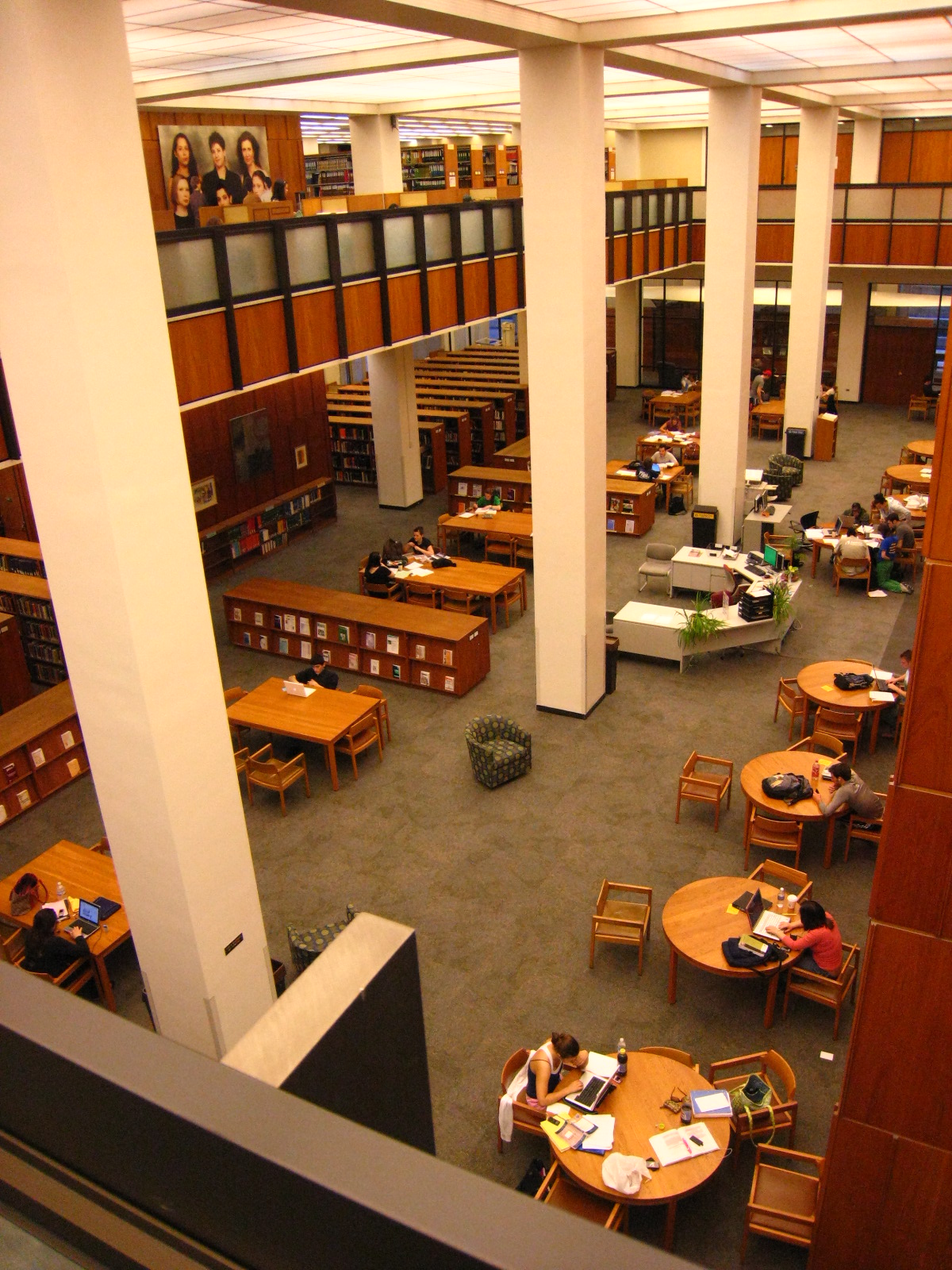
A library might be the perfect place to do your school research!
Although it sounds simple, don’t forget to determine your own needs and wants in a graduate program. Genetic counseling programs share many similarities but they also have unique experiences to offer their students. It’s important to think about what you want out of your training and the things that are most important to you. This might be things like location, cost, clinical experiences, or program structure. Be sure to take the time to research the program and see how it compares to your wish list. --Alyssa Azevedo


Get Ready for Study Parties! 


It is really hard to say good-bye to a job, and a salary, and the ability to fly to Norway for a week just for fun. I had to uproot my life, and to move to take on graduate school.  My husband and I knew it was very likely that we would be changing cities (he would be changing jobs) so that's not a small thing, but I think the best advice is that there are always reasons to not do things, but there will never be a perfect time so embrace that this might be the right time. Also, invest in a nice backpack...computers are really heavy. 
– Natasha Robin Berman


If you have a break between graduating from a four-year program, and starting this one, take a class or two. It can never hurt, and will get you back into the swing of lectures and studying. Sitting in class all day, actively listening, is not passive; if you engage in a lecture (which I recommend), it is active: a conversation between you and the instructor. I underestimated the energy it takes to sustain that internal dialogue, so if you are in class all day and A.) feel totally exhausted, or B.) feel like you didn’t get much accomplished, remind yourself that good listening is hard work!-- Charlotte Skinner


Friday, July 20, 2018

Back to School...Again Part 5


We continue our summer series with our fifth installment. 
In the penultimate part of our series ”Going Back to School”… students continue to answer questions about what it is like to leave the working world to enter graduate school. We hope our experiences have helped others feel more confident about the prospect of going back to school. This weeks’ blog post asks: 
What recommendations do you have for surviving grad school?


I think the most important part is to know yourself and set yourself up for success.  Maybe take a class at night or online to practice being a student again.  Definitely know your study habits and find a steady spot (or two) ahead of time to get your work done.  A nice desk setup, coffee shop, or library spot is critically important.  Know what you need to succeed, be it a coffee maker, a nice pair of headphones, or a study buddy.  A set schedule or a gym membership may also come in super handy. – Sarah Brunker


Be patient with yourself. Appreciate that you are a different person than you were in undergrad and in any past work positions. This is a new experience with different constraints and goals. I initially tried to fall back on my old strategies for both studying and stress relief and realized that many were no longer a good fit. On the practical side, it is not a bad idea to take an in-person course over the summer before going back in order to get a refresher on how to take notes and manage assignments.-- Caitlin Russell


A sense of humor and humility are key here.  Being able to understand what you don’t understand and then reach out to the appropriate channels is just a grad school requirement.  The faster you can accept that this is a new day and a new challenge, the faster you’ll be able to embrace the process.  Keeping perspective has also really helped to alleviate some of the stress as well.  Unlike undergrad, I am more motivated by knowledge than points this time around. This has really given me the freedom to look further into topics presented in class and forgive myself for test scores that were a little disappointing.  In the end, grad school is about preparing you for your career, so being able to appreciate all the learning opportunities will make you a better professional. -- Kelsey Bohnert

Remind yourself that going back to school isn’t easy. It takes time to transition back and adjust to academic challenges such as sitting in lectures each day, studying, and taking exams. It’s important to be patient and reward yourself for your achievements (no matter how small).– Alyssa Azevedo


This is a really good time to readjust and try to integrate good practice into your everyday life, for me it is doing things like yoga or other important self-care - by making myself a priority now I know I’m creating good habits that I can use when I’m in the ‘real world’. I also think it is important to remember that while it is easy to get swept up in the small stuff, the larger picture is that I’ll get to be a genetic counselor at the end of this, and trying to get everything out of my time in school so I’m the most prepared I can be is the more important thing. I think really trying to challenge yourself in the safe space that is school and your training is really helpful, it is hard but at the end you’ll know you really gave it everything and with grad school (like so many things in life) you get out of it what you put in. 
– Natasha Robin Berman

Buy a giant desk calendar. In a rather frantic trip to Staples one night, after fumbling through my first couple of weeks, I found myself in line with a gigantic desk calendar. It proved pivotal in improving my time-management skills the first semester. Having the month out in front of me was instantly relieving. In a glance, I could budget my time week to week, knowing when I needed to buckle down, and when I could afford a day for self-care. Now, filling it out it is a monthly ritual. Secondly, carve out enough time for some exercise (even just a walk!), healthy food, and sleep- no matter how hard it may get (you’re not you when you’re hungry, or sleepy, right!?). Lastly, be kind, be curious, be bold, and be courteous. -- Charlotte Skinner


Friday, July 6, 2018

Summer Series: Back to School...Again Part 4

Today’s blog is a continuation of our summer series about going back to school. We have been asking some of our students who took time off before coming back to school a variety of questions about how they decided to come back and what it has been like. This week we’re asking one of the most important questions:
Would you do it again?


If I could do it all over again the only thing I would change would be that I would have started the process of going back sooner! – Sarah Brunker


100% - I have no regrets about any of the decisions I made that led me here. I really enjoy all that we are learning and cannot wait to envelop myself in it as a career. But, it required a lot of sacrifices and leaving a life that I felt I was finally settling into. While it was certainly a scary leap to make, I’m glad I did. --Caitlin Russell


Without a doubt.  I miss my old position, but I am certain this is the right choice for me.  I’m glad I took the time to try on a few hats before I settled on this path.  It has not only given me confidence in my pursuit of a Masters in Genetic Counseling, but it has also brought a unique perspectives to my studies. -- Kelsey Bohnert


Yes! I love being in the classroom again and working in a collaborative learning environment. Although leaving a steady job (and income) is terrifying, I wouldn’t change a thing. I’m proud of myself for taking such a huge step and investing in myself and future! – Alyssa Azevedo


110% yes, I wouldn’t do it any other way! I think my coming back to school has helped me have perspective I otherwise wouldn’t have, and I hope it has been a useful perspective for my classmates. I’ve really enjoyed going back to school, and I’m even more excited to be starting in a field that I know I’ll love to work in. I know that this is a sacrifice in many ways, but one that I know I will always be happy I made. When one considers that if you work a normal 40-hour week you probably spend more awake time at your job than you will with your family, it should probably be something that you feel good about. – Natasha Robin Berman


Yes, I certainly would. I have been pressed, and sometimes super stressed, but I feel so confident entering the clinic now. This program is tough; some weeks, it can feel like a marathon. But when you finally look up, seeing how much you have learned and grown gives a sense of confidence like nothing else I have accomplished. – Charlotte Skinner