Friday, October 28, 2016

Optional Rotation: Child and Adolescent Bipolar Spectrum Services

The field of genetics/genomics is currently one of the fastest growing in science.  Every day, new variations in the human genome are discovered and their potential effects on the body are delineated.  Some mutations and changes have easily understood effects that accompany them, while others are do not have such clear cut answers.  One area that has been captivating scientists for years is the genetics of mental health.  There has been significant research conducted concerning this field of study, and while some results have been promising, such as that of a recent team that discovered singlenucleotide polymorphisms (SNP) more common among individuals with schizophrenia , scientists have largely not found any consistent clinically significant genetic changes that contribute to an individual’s mental health.


Last fall, we had the pleasure of having Dr. Jehannine Austin, president of the National Society of Genetic Counselors (NSGC), talk about her experiences running the first ever genetic counseling clinic specifically targeting patients with psychiatric disorders.  Although genetic testing is not available for these patients, Jehannine and her colleagues were able to speak to them about the multifactorial nature of their disorders, how both genetic and environmental factors were tied to their presentation.  Listening to Jehannine talk about how these services she and her team provided peaked my interest in potentially being a future resource and a genetic counselor who would value the opportunity to counsel patients on mental health disorders.  This was one of the reasons why I chose to pursue an optional rotation at the Child and Adolescent Bipolar Spectrum Services (or CABS clinic.)  The clinic services youths with bipolar disorder, following their treatment, providing therapy services, coordinating other aspects of care such as school services, following up with inpatient treatments, and offering clinical research opportunities for those who qualify.  I went in with the hope that I would leave the rotation with a better understanding of pediatric psychiatric disorders, as well as the treatment and management options that follow after diagnosis.

The CABS clinic was gracious enough to allow Brooke Hornak, Michelle Morrow (who also share the same interest as I do) and me to join their team for a month.  The experience I had there was absolutely incredible, and although I was only there for a small portion of time, I feel that through my observations I was able to learn much about the intricacies of medical psychiatric care. During my rotation, I was able to observe intake sessions and medication and treatment follow-ups.  During intake sessions, new patients were seen during two different appointments.  During the first session, patients were asked a series of very detailed interview questions by a therapist or social worker that helped to determine the child’s experience with mood changes and overall mental health.  Questions were also asked regarding past medical, developmental, educational, and social history, and any reports of trauma or abuse.  The second session involves a review of the information, and is followed by a discussion with one of the psychiatrists about whether or not the individual meets any mental health diagnosis criteria.  If the psychiatrist believes that they do have bipolar disorder, the patient then has the opportunity to continue care through the CABS clinic or through another psychiatric care facility.  These intake sessions were extremely interesting to observe.  The questions often resulted in very difficult answers.  Many children as young as 3 or 4 presented with a past history of trauma, and had significant psychiatric symptoms as well.  However, all of the clinicians were extremely kind, patient, and thorough with the patients and families, and by watching them I truly feel that I learned important skills in terms of counseling individuals with seriously negative psychosocial events in their pasts.

I also had the opportunity to observe the psychiatrists as they followed up with their patients about treatment and their progress.  During these sessions, it was very apparent how much the child’s bipolar disorder could affect the entire family.  Many parents and siblings became visibly emotional, and felt tired and even helpless.  However, once again, the clinicians at the CABS clinic expertly addressed these concerns and worries head on, which was inspiring to watch.  As a genetic counseling student, one of our roles that we consistently learn about, is that our field has a focus on tending to the whole patient, not simply addressing only their medical diagnosis and treatment, but the psychosocial issues that may come with it.  Being able to observe these sessions showed to me how truly important it is to care for the mental health of the entire family as well, so that the family could function well for the good of the patient.

My time at the CABS clinic was exciting and inspiring to me.  Watching and learning from individuals who have mastered a plethora of psychosocial skills was incredibly valuable to me during my clinical rotations.  Seeing children and families affected by bipolar disorder, and the strength and resilience they showed during treatment, pushed me further to pursue a genetic counseling position that would directly help individuals with a history of bipolar disorder or other mental health disorders.  I know that my fellow students and I greatly enjoyed our learning experience, and I can only hope that future genetic counseling students can utilize the CABS optional rotation and learn from the wonderful team and families there.

 - Emily Massiello, Class of 2017


Friday, October 14, 2016

Optional Rotation: UPMC Hereditary GI Tumor Program

Upon entering the program, I had a strong interest in cancer genetics and wanted to take every opportunity to expand my knowledge in this area. For my optional rotation, I chose to spend three weeks with two wonderful genetic counselors in the UPMC Hereditary GI Tumor Program at Shadyside Hospital. Patients are referred to the clinic for a variety of suspected hereditary cancer predispositions. This may be due to a personal diagnosis or a family history of polyps or gastrointestinal cancers. During my rotation, I was able to see patients whom we counseled regarding Lynch syndrome, Cowden syndrome, and familial pancreatic cancer – all of which I had not yet had the opportunity to see as part of my rotations.

Before coming into this optional rotation, I had completed two general cancer rotations, so I had a solid understanding of how a general cancer genetic counseling session went. I was comfortable counseling patients regarding Hereditary Breast and Ovarian Cancer, and I was familiar with ordering gene panels for patients. I was able to take these skills and continue to build on them - addressing psychosocial issues in session, learning the nuances of cancer counseling, and crafting my own counseling style. Most importantly to me, I became intimately familiar with the numerous hereditary colon cancer syndrome criteria and guidelines that had initially felt overwhelming when I learned about them in class.

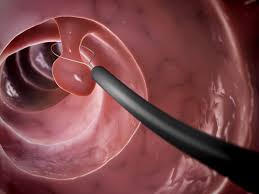
Another terrific experience I gained during this rotation was observing the same surveillance procedures I had discussed as management recommendations with patients throughout my rotations. Individuals at an increased risk for colon cancer and polyps have more frequent colonoscopies than the general population. Some of the cancer predispositions confer an increased risk for gastric, small bowel, and pancreatic cancer. The first two can be screened for with upper endoscopy and pancreatic cancer surveillance can include endoscopic ultrasound. Having observed these procedures, I feel that I can speak about them more confidently when describing them to the patients.

As a MS Genetic Counseling/MPH Public Health Genetics dual degree student, I felt that this rotation was extremely valuable as it gave me the chance to learn more about Lynch syndrome, which is one of the CDC’s Tier 1 conditions. The information that I learned in clinic has allowed me to participate more fully in my Public Health classes, especially those in which these Tier 1 conditions are discussed, which in turn allows me to help educate my peers who do not have a genetic background. The education of other healthcare providers and policy makers is going to be part of the multifaceted role I have as a practicing genetic counselor, which makes the education of my peers a valuable learning experience.


I am very grateful that I had this rotation experience. I think it was a perfect one for me as it allowed me to gain more experience in cancer genetic counseling sessions, get the opportunity to interact with patients with a variety of syndromes not seen as frequently in the general cancer rotations, and acquire knowledge that dovetailed with my Public Health classes.

- Emily Griffenkranz, Class of 2017


Saturday, October 1, 2016

NSGC's Annual Education Conference 2016 Reflections

The 2016 was the Class of 2017's first full Annual Education Conference. Between the breakout education session, exhibition booths, ever growing job board, and overall atmosphere of excitement, it is nearly impossible to pick what was the most valuable or favorite moment. Below are are few of the many great experiences our students had.


It was amazing and energizing to see the wide variety of specialties and expertise of our profession presented in one place. - Kavitha Kolla


I really enjoyed the alumni dinner. I was able to get great input about jobs in some of the different areas that I'm considering. Plus it was lovely to meet others who attended the program. - Emily Griffenkranz

I enjoyed hearing about the latest research in psychiatric genetics and neurogenetics.  I’m looking forward to growth and additional job opportunities in these fields! - Michelle Morrow

I really enjoyed the Exhibition booths because I liked collected resources about specific diseases and learning about services and support groups for patients - Emily Massiello

I loved Matt Might’s talk about how he used social media to aid in the diagnosis of his son’s rare disease. It meant a lot to see one parent advocate as much as he could for his child and in that process establish connection between advocacy groups, researchers, and families. - Sam Wesoly


My favorite part of NSGC was Dr. Belinda Fu’s presentation. I loved how she exposed herself to show the importance of being mindful when talking to patients. She led an engaging talk I know will be able to utilize in my practice. - Brooke Hornak 


I found both future and current presidential speeches inspiring and took away a beautiful message to stay true to yourself while also always pushing yourself to be more - Anna Zakas


There were so many great talks at NSGC, but there was just no way to attend all of them. However, by dividing up session with classmates and meeting up later to discuss them, I don't feel like I missed out on anything and I had an opportunity to both learn and teach my classmates. - Christine Munro

It was so wonderful to see how much the profession has grown and how many opportunities are available to us. You really can take genetic counseling in so many different directions. It was also really great to network, especially with all of our successful alumni - Leslie Walsh

The most valuable thing to me was realizing how much I have learned from the program and rotations. Sitting through the lectures and sessions I felt like I had a good idea if the topics and issues discussed. - Sara Blankenship


I loved seeing so many genetic counselors in one spot. It was wonderful to meet future colleagues and build professional relationships. - Bryony Lynch

Friday, September 16, 2016

Student Work Positions: Clinical Study Coordinator

My student employment position is clinical study coordinator in the laboratory of Dr. Zsolt Urban in the Department of Human Genetics.  Dr. Urban’s lab investigates the genetic basis of a rare connective tissue disorder called cutis laxa, and I am responsible for the clinical branch of the research program.  This work has given me incredible experience in conducting human subjects research, managing a clinical study, and providing support to families affected by genetic conditions.  This job has too many facets to fit in a single blog post, but I hope to touch on some of the most important.

Cutis laxa (CL) disrupts the normal formation of the extracellular matrix, which is the cellular scaffolding for connective tissue.  Connective tissue is a crucial component of every bodily system.  In CL, the skin is the most visible organ affected, and many people with the condition have a wrinkled or prematurely aged appearance.  This can have significant psychosocial consequences for patients.  But in addition, because connective tissue is a crucial component of every body system, cutis laxa can cause neurological, musculoskeletal, genitourinary pulmonary, and cardiovascular problems.  These problems can be present from birth or can develop over time, and some have the potential to be life-threatening.  Mutations in over ten genes have been found to cause CL, each associated with a different subtype of CL.  Each subtype is characterized by its own particular combination of symptoms and severity, although there can be significant overlap between subtypes.


Research in Dr. Urban’s lab is focused on identifying the mechanisms by which mutations in cutis laxa-causing genes produce specific symptoms.  As cutis laxa study coordinator, I collect and compile clinical data from individuals who have agreed to participate in our research studies.  This data guides future research projects and complements the molecular research taking place in the lab.  Thanks to the participation of our study families, we are constantly adding to a database of patient information that allows us to investigate the relationship between particular gene changes and features of the different subtypes of cutis laxa.  My thesis work will investigate one aspect of the features associated with ATP6V0A2, one of the known cutis laxa genes.  

Another important aspect of my work is communication and education.  I have had the opportunity to speak on cutis laxa at local and international patient events.  I monitor the patient support group Facebook page and search our data and the literature to answer questions ranging from whether particular symptoms are associated with CL, to how many patients are known to have a particular subtype.   I maintain the lab website, which is, for many patients, a first stop in their search for information on the condition.  I regularly speak withindividuals and parents of children who have been diagnosed with cutis laxa, and provide them with resources and information.

One of the most important aspects of my job is coordinating a semi-annual cutis laxa research clinic.  This clinic, which is attended by families from around the world, is an experience unlike any other.  It involves two days of intensive clinical and research testing, as well as an information day with talks given by clinical specialists, researchers, and study team members.  Attendees have told me that the clinic is a life-changing event.  For many, it represents the first time in their lives that they have met others who share similar experiences.   In addition, the clinic brings relief to many by connecting them with expertise and information about the condition.  Because cutis laxa is so rare, most health care providers will never have the opportunity to gain experience in diagnosing or caring for a person with the condition.  As a result, affected individuals and families can feel fear and helplessness in the face of the unknown, in addition to the isolation and stresses inherent in the search for a diagnosis.  Despite the lack of a cure for CL, a connection to knowledge has both practical and emotional value.


The cutis laxa research clinic, as well as my day to day work, has allowed me to interact and learn from inspiring families and individuals.  I have met parents of children with cutis laxa who set the example of unfailing positivity and love in the face of health challenges.  I have met adults who travel to Pittsburgh and participate in the clinic with no other motive than to promote progress in understanding and treating the condition, so that future patients might benefit.   It is truly a privilege for me to be able to play a role in bringing the amazing individuals and families in the cutis laxa community together with Dr. Urban, our research team, and each other.

- Michelle Morrow, Class of 2017


Friday, September 2, 2016

Looking Forward with the Class of 2018

As the Class of 2018 completes their first week at the University of Pittsburgh's Genetic Counseling Program, we wanted to know what they were most exited about. Here are their answers!

"I look forward to getting hands-on experience in clinical rotations and learning from people in the field."  - Seth Lascurain

"I am excited to take classes that directly relate to my field of interest and to be able to network with genetic counselors and other professionals doing research in this field." - Joya Petersen

"I’m looking forward to all of the amazing opportunities that the program has to offer in order to make myself the best genetic counselor as possible. I’m also super excited about living in Pittsburgh!" - Claire Leifeste

"I would say that I’m extremely excited about everything. Not only do I have the experience of living in Pittsburgh and taking classes related to my career ahead of me, but I also have the opportunity to create lasting bonds with my classmates/future colleagues!" - Megan Hager

"I am excited to gain the knowledge and experience necessary to become a great genetic counselor by learning from leaders in the field in a city with such incredible health care systems. I am also really looking forward to exploring Pittsburgh, my favorite city, with my classmates!" - Julia Verbiar

"I am especially excited to have genetics at the forefront of my life again and for all of the personal and professional growth ahead of me. I also feel particularly grateful that I get to share my grad school experience with such an amazing, passionate group of classmates, and I look forward to our many adventures together in Pittsburgh." - Julia Stone 

"I am most excited to get the chance to learn theoretical concepts in the first year and to watch how this knowledge transforms into functional treatment skills that can be used to help people over time throughout the clinical rotations." - Jaclyn Amurgis  

"I’m excited to receive my graduate education from a program with a rich history in a city with incredible clinical opportunities. I can’t wait to learn the knowledge and skills to be able to help others in a new way." - Emily Spoth

"I’m excited to get back into learning the nitty gritty details of genetics and disease, as well as hanging out in this amazing city with such wonderful new friends!" - Kaitlin Sullivan

"I am looking forward to taking classes in the field and to start working towards becoming a genetic counselor!" - Emily Mazzei

"I am excited to share 2 years with my new classmates and colleagues, learning what we need to know to succeed as genetic counselors, and to explore everything Pittsburgh offers!" - Jennifer Peck

Wednesday, August 17, 2016

Ophthalmology Optional Rotation

The eye has played a major role in human genomics. Retinoblastoma (RB1) was the first human cancer gene to be cloned, Leber hereditary optic neuropathy was the first mitochondrial disorder defined, and X-linked red-green color blindness was the first X-linked disorder described. 50% of pediatric blindness is due to a genetic etiology, and the eye is second only to the brain as an organ in its frequency of involvement in genetic disorders.


As part of our training in the second year of the genetic counseling program, we are able to select an optional rotation within a clinic of our choice. I elected to complete my rotation in the Division of Pediatric Ophthalmology, Strabismus and Adult Motility at Children’s Hospital of Pittsburgh of UPMC.  I selected this rotation as a way to expand my knowledge of genetic syndromes and to gain insight into the work of a sub-specialized genetic counselor. This clinic sees patients for a variety of indications including nystagmus (involuntary movement of the eyes), congenital corneal opacities, infantile and pediatric glaucoma, congenital and early-onset cataracts, stationary and progressive retinal diseases, neuro-ophthalmologic conditions, and multisystem disorders with ocular conditions.  The clinic also sees a variety of conditions that may or may not have an underlying genetic cause.


During the rotation I became familiar with ocular terminology as well as testing methods often used in the clinic including fundus photography (pictures of the retina), Visual Evoked Potential (VEP), which measures the brain’s response to visual stimuli, Optical Coherence Tomography (OCT), which uses light waves to take a cross section picture of the retina, and electroretinography (ERG), which measures the responses of the retina to light. When a patient has an abnormal finding from one of these tests, then follow up testing and a consultation with a genetic counselor may be warranted.


Because many healthcare providers work together on each case, I was also given the opportunity to see a technician perform an initial visual workup on an incoming patient and to observe VEP and ERG testing. As a student I was also shown images from testing that helped to illustrate signs of disease corresponding with particular genetic disorders. Seeing these procedures allows me to describe to patients what they may expect from an ophthalmological workup.


The department also hosts a weekly department meeting as well as a monthly case conference with the counselors and physicians of Medical Genetics, and at both of these meetings I was able to present on a topic of interest or discuss a particular case.
 

A patient may be referred for genetic counseling for a number of findings, but common indications include developmental abnormalities of the anterior segment that result in corneal opacities or glaucoma, bilateral juvenile cataracts, colobomas (incomplete closure of different structures of the eye), aniridia (absence of iris), retinopathies or retinal abnormalities, retinoblastoma, suspected connective tissue disorders, and unexplained vision loss.  When a patient is referred, they are usually seen by a technician who will test their vision as well as by an ophthalmologist to perform a detailed exam of the front and back of the eye. Based on their findings a patient may be referred for specialized testing and then be seen by a genetic counselor to order genetic testing for whatever condition is suspected. The genetic counselor also has the job of educating physicians within the department about genetic disorders as well as coordinating resources, services, and evaluations for patients with low vision. Finally, clinical trials of gene therapies are currently underway for several ophthalmologic genetic conditions, and the genetic counselor plays a role in sharing these opportunities with their patients who have had genetic testing.

I really enjoyed my experience rotating through Ophthalmology, and I would recommend this rotation to any student who is looking to learn about the roles of sub-specialized genetic counselors and the expanding role of genomic medicine in general healthcare.

- Amy Kunz, class of 2016

Friday, August 5, 2016

Summer in Pittsburgh


Summer is a time to get outside, enjoy the sunshine, and find adventure. Luckily for students in the Genetic Counseling Program, here in Pittsburgh, there is no shortage of ways to take advantage of the warmer season. Check out some of our favorite ways to spend the summer. 

1. Trails
For a city, we have found Pittsburgh to have a surprising amount of green space. There a number of parks, many located near campus and in the neighborhoods where students tend to live. There are miles of trails to explore by foot or bike. You could hike most of the day, and you would never know that you are in the city. Plus, there are also off-leash areas in some of the parks so you can take your dogs on adventures with you. 

2. Public Pools
Pittsburgh has a number of public pools located throughout the city, so there should be one that is convenient to you.  Students can purchase a year pass for $35 or pay the $5 daily rate to access them. The pools have lots of green space to lay out towels, read, and dry off. They really are the best way to spend a lazy afternoon -  just don’t forget your sunscreen!

3. Biking
With so much to explore in the city, it seems like you would never get to see it all on foot, but biking opens up a whole new world. The recent addition of bike lanes has made many roads more bike friendly for both everyday commuting and exploring, and we have taken advantage of it. One of our favorite things to do is bike along the river. While there, it always an adventure to explore downtown: seeing all the murals, finding art installations, and soaking in the vast variety of architecture.  Don’t have your own bike? Don’t worry! Healthy Ride PGH has bike share stations set up in convenient locations, allowing you to rent a bike when you need one and then drop it off when you’re done. 

4. Kayaking
As a city full of bridges it is impossible to forget the rivers! In Pittsburgh, the Allegheny, Monongahela, and Ohio Rivers converge, so there is a lot of water running through the city. There is nothing better than looking at the skyline from the water, complete with Heinz Field and PNC Park. Better yet, there are always student discounts on kayak rentals throughout the summer. 

5. Ohiopyle State Park 
Sometime adventure takes you outside of the city. If that is the case, Ohiopyle should be your destination. Why?  A natural water slide created by the river cutting through 300-million-year old sandstone. If that isn’t enough, the park also boasts white water rafting, camping, horseback riding, hiking, and biking trails. 

6. Summer Events
Throughout the summer there are events hosted in different neighborhoods.  Here are a few to look out for:
  • Jam on Walnut: This 3-night event benefits the Cystic Fibrosis Foundation. For one night each month of the summer, Walnut Street is closed and celebrations begin with live music from local bands, food trucks, and vendors added to the great shops that are permanent features.  Who can say no to fun summer nights for a cause? 
  • Squirrel Hill Night Market: Murray Avenue is closed down in the evening for a pop up market featuring local artists, craftsmen, and vendors along with live music and food trucks. 
  • Open Streets PGH: This community building and fitness event was started by Bike PGH. The idea is to get everyone out and moving by closing the streets to traffic and opening them up for people to walk, run, bike, rollerblade, or skateboard through a 3-mile stretch of the city. There are also salsa lessons, yoga, and group fitness classes, free of charge. 
  • Cinema in the Park: Throughout the summer, Schenley Park hosts outdoor movies on Wednesday nights. Other parks throughout Pittsburgh do the same.  Just bring a blanket or a lawn chair to sit back, relax, and enjoy the show. 


- Emily Griffenkranz, Class of 2017